


OEM & ODM Cleaning Products Manufacturer in China
Custom contract manufacturing for non woven mop heads, microfiber mops, and commercial cleaning cloths. From raw material specification and fiber blending to automated converting and private-label packaging, production is structured for international distributors, janitorial supply houses, and healthcare hygiene suppliers.
Manufacturing Service Models
OEM Contract Manufacturing
Production strictly adheres to buyer-provided technical drawings, physical samples, or master product specification sheets.
Ideal For: Established brand owners, importers, and regional distributors with standardized product dimensions, established color coding, and existing artwork files.
Manufacturing Focus: Dimensional tolerance control, consistent fiber density, seam strength repeatability, and scheduled batch delivery.
ODM & Specification Co-Development
Collaborative development focused on material optimization, structural modification, and GSM adjustments to achieve specific performance targets or cost structures.
Ideal For: Companies expanding into new hygiene sectors, healthcare facilities, or commercial cleaning segments requiring specialized absorbency or physical dimensions.
Manufacturing Focus: Rapid physical prototyping, functional fiber formulation, attachment fitting adaptation, and wash-cycle optimization.
Customization Capabilities & Technical Parameters
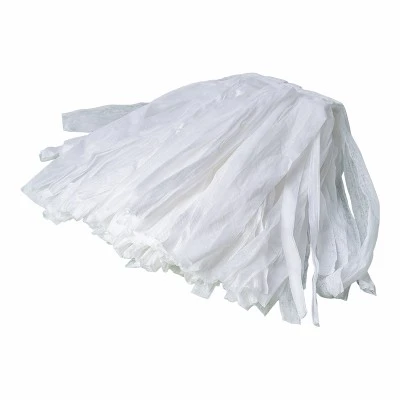
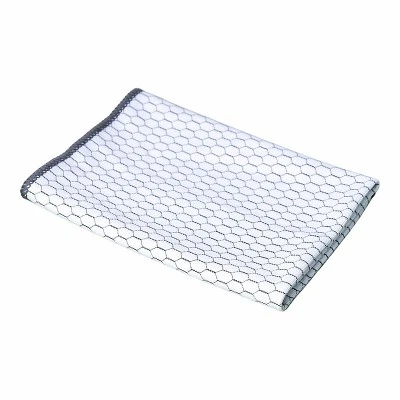
Product Categories: Non woven mop heads, microfiber strip mops, flat microfiber mop pads, disposable floor wipes, and non woven wiping sheets.
Raw Material Options: Viscose and polyester blends, polypropylene, needle-punched non woven, spunlace fabric, and split microfiber with 80/20 or 85/15 polyester/polyamide ratios.
Fabric Weight And GSM Range: 30 GSM to 350 GSM for flat sheets and wiping cloths; custom strand thickness and yarn density for strip mops.
Dimensions And Profiles: Custom length, width, strand width, straight-cut, wave-cut, or custom die-cut profiles matching specific frame locking mechanisms.
Color Systems: Four-color coding systems (Red, Blue, Yellow, Green) for hygiene zoning, alongside custom color dyeing for private label product lines.
Structural Assemblies: Threaded plastic sockets, clip connectors, band bindings, hook-and-loop backings, multi-needle reinforced stitching, and ultrasonic edge bonding.
Packaging Formats: Individual polybags, printed retail boxes, display master cartons, vacuum-packed bales, and roll packaging configured for transport efficiency.
Private Labeling: Sewn-in fabric tags, heat-transfer logo application, custom outer carton printing, barcode labeling, and serial marking.
Operational Manufacturing Infrastructure
Converting Equipment and Production Floor
The converting facility houses high-speed non woven roll-slitting equipment, automated rotary cutting units, ultrasonic welding machinery, and multi-needle industrial sewing lines. Dedicated conversion paths separate non woven processing from microfiber assembly to eliminate cross-fiber linting during production runs.
Material Evaluation and Rapid Prototyping
Technical teams test raw fiber tensile strength, fluid absorption speed, linting tendencies, and seam retention. Pre-production physical prototypes are produced to verify physical weight, handle connection compatibility, and structural integrity prior to commercial-scale output.
Annual Output Capacity
Multiple automated converting lines operate to support an annual volume exceeding 10 million mop head units alongside large-scale cleaning cloth production. Flexible shift scheduling accommodates volume scaling during peak periods and regular container-load shipments.
Logistics Execution and Export Staging
Products are packed into double-wall corrugated cartons, shrink-wrapped on standard pallets, and staged in dedicated dry storage bays to maintain product integrity and prevent moisture uptake prior to ocean container loading.
Custom Production Process Flow
Technical Requirement Intake
Submission of physical samples or specification sheets detailing product category, material composition, GSM, dimensions, connector type, packaging requirements, and order volume.
Engineering Feasibility Review
Assessment of material availability, fiber blend suitability, mold compatibility for plastic connectors, and carton packing density for freight optimization.
Commercial Proposal and Prototype Planning
Provision of tiered volume pricing based on raw material costs and specifications, accompanied by a prototype production timeline.
Prototype Verification and Approval
Physical prototype inspection verifying dimensions, fluid absorption capacity, seam tensile strength, and hardware fitment. Production commences upon formal sign-off.
Commercial Scale Manufacturing
Batch manufacturing under continuous parameter checks, incorporating automated material slitting, controlled stitch density, and socket ultrasonic welding.
Quality Verification and Staging
Final product sampling, weight verification, package integrity inspection, outer box barcode scanning, and container loading coordination.
Quality Control Protocols
Raw Material Lot Inspection
Incoming non woven fabric rolls and microfiber yarn lots undergo verification for GSM uniformity, tensile strength, color consistency, and fiber composition before release to converting lines.
In-Process Hourly Parameter Verification
Automated and manual checks measure stitch line density, ultrasonic weld strength, connector socket retention force, and dimensional tolerances at scheduled intervals during active runs.
Physical Performance Verification
Finished batches undergo testing for weight distribution, liquid absorption rate, lint release under friction, and colorfastness against approved reference standards.
Final Inspection and Packing Audits
Completed lots are audited using standard Acceptance Quality Limit sampling techniques to verify product appearance, seam security, socket installation, and carton unit counts.
Shipping Packaging Audits
Outer master cartons, inner polybags, barcode readability, and shipping marks are verified against confirmed order manifests before pallet wrapping.
Retained Sample Management
Physical reference samples from every completed shipment are stored in archive facilities to ensure long-term material, color, and dimensional consistency across future orders.
Private Label and Packaging Integration
Custom Product Tags
Sewn-in fabric labels, care tags, and product identity markers featuring custom barcodes, washing instructions, and tracking codes.
Packaging Configurations
Custom-printed polybags, header cards, paper belly bands, retail display boxes, and multi-packs engineered for commercial distribution or retail display.
Outer Carton Markings
Direct master box printing or labeling showing side-mark details, barcode labels, transport handling symbols, and optimized pallet layouts for distribution centers.
Vector File Implementation
Packaging layouts are produced directly from client vector graphics (AI or PDF formats) to maintain accurate color rendering and print fidelity.
Standard Customization Solutions
Solution Framework 1: Four-Color Non Woven Mop System
Application Target: Commercial hygiene suppliers requiring disposable non woven mop heads to prevent cross-contamination in medical environments.
Material Specification: Viscose and polyester blend (70/30 ratio) non woven fabric at 120 GSM, wave-cut strand edges, color-coded top bands (Red, Blue, Yellow, Green), universal screw socket.
Converting Details: Automated roll-slitting to uniform band widths, with ultrasonic cap bonding eliminating adhesive contamination.
Performance Criteria: Zero lint release under dry friction tests, with fluid absorption reaching 800 percent of dry weight.
Final Configuration: Color-coded disposable mop heads packed in 50-unit polybags with customized outer master carton markings.
Solution Framework 2: Heavy-Duty Commercial Microfiber Strip Mop
Application Target: Commercial janitorial supply wholesalers requiring washable microfiber strip mops for heavy floor maintenance.
Material Specification: Split microfiber fabric (80/20 ratio), 220 GSM, double-stitched center band, heavy-duty threaded socket connector matching commercial mop handles.
Converting Details: Reinforced multi-needle stitching across the center band with adjusted thread tension to endure high-temperature laundering cycles.
Performance Criteria: Socket connection pull-strength exceeding 25 kilogram-force, with colorfastness maintained above Grade 4 after hot water laundering.
Final Configuration: Heavy-duty microfiber strip mop heads packed in bulk shipping cartons featuring private-label branding tags.
FAQs

Start Your Contract Manufacturing Project
Send target specifications, sample details, or product requirements to receive a detailed engineering review and comprehensive price breakdown within 24 hours.